Using the case study of Northern Bar El Ghazel (NBG) State, this report assesses the extent to which displaced and returnee households are reintegrated and whether the area’s infrastructure and services can accommodate more returnees. The report finds that the area is relatively safe, but it’s marred by isolated security incidents, land disputes, food insecurity, and shortage of shelter, and limited services, including security, health, and education. The report provides some recommendations on how to…
repository
CSRF Research Repository
The CSRF Research Repository aims to support greater contextual knowledge for policy makers, programme managers, and implementers by providing a searchable repository of research, analysis, and resources, and providing periodic updates on new research and analysis.
This blog by Ranga Gworo and CSRF highlights the conflict risks of a different type of flooding in specific contexts. Using the case of Lafon, the blog explores the impact of pluvial flooding in the area, and shares reflections on considerations for conflict sensitive flood response. Photo credit to Paul Ugila, photo taken in Lafon depicting a bad road due to floods. Amid the protracted economic crisis and political uncertainty, South Sudan faced unprecedented…
Using the cases of South Sudan and Myanmar, this brief reflects on the impact of aid cuts on conflict sensitivity, and provides recommendations to donors, implementing organisations, and policymakers. Particularly, the report considers different key elements of conflict sensitive programming, including conflict analysis, implementation, partnership, inter-agency collaboration.
This policy brief highlights the role that donor headquarters play in shaping the incentives and rules of the aid system, influencing implementing partner decisions, policies, and investments. It takes a deeper look at how some well-meaning policies can unexpectedly backfire, leading to new challenges, inefficiencies or in some cases, perpetuate conflict. To do so, it analyses five well-meaning policies common to many donors that can have unexpectedly negative results within conflict-affected countries, providing examples from…
This briefing provides field-based reflections and Conflict Sensitivity Lessons of the Partnership for Peace, Recovery and Resilience (PfPRR) in Rubkona, Leer & Mayendit, South Sudan. The reflections build on the CSRF’s accompaniment to PfPRR stakeholders in Rubkona/Bentiu and point at some key lessons learned, including the significance of the PFPRR as platform for collaboration, the importance of leadership at all levels, increased ownership by the involved agencies and that greater inclusiveness should be encouraged.
This special issue focuses on the understanding and application of two closely related concepts, “do no harm” (DNH) and “conflict sensitivity”, and their critical engagement in the academic literature. Mary Anderson published her seminal book Do No Harm: How aid can support peace – or war in 1999, which popularised the idea of conflict sensitivity in development, humanitarian, and peacebuilding practice. Since then, many models and tools have been published and considerable efforts have been…
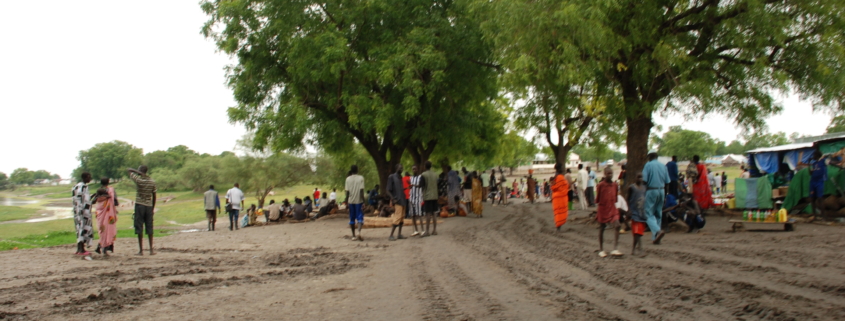
Introduction Murle society is non-hierarchical and political power is diffused to the extent that there are no institutional leadership roles. It is thus often represented as lacking credible and legitimate governance structures. While Murle society is acephalous and egalitarian, in that there is no single leader like a king and decisions are instead taken collectively, there are clear authority structures that should be understood.[1] The above representations are, quite significantly, part of the narrative that…
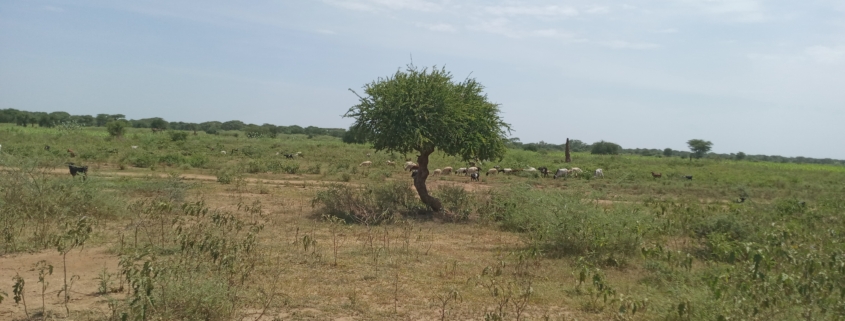
Kapoeta, a semi-arid area,[1] has been experiencing severe drought conditions since 2021 caused by climate change.[2] The changing conditions have reportedly resulted in the spread of invasive weed species in the last two to three years. These include Beku (local name) with the scientific name Prosopis Juliflora and Abonglogir (local name) with the scientific name Parthenium. Invading farms, grazing land and roadsides, these weeds have a devastating impact on livelihoods, such as farming…
Improving collaboration, coordination and learning between humanitarians and peacebuilders is an ongoing challenge. Despite their different approaches, both groups need to rise to this challenge to help achieve their shared goal for the future of South Sudan – that South Sudanese live prosperous, dignified, and secure lives. This paper seeks to provide with a clearer understanding of how, where, and when stronger coordination, collaboration and learning between humanitarians and peacebuilders will more effectively leverage each…
South Sudan continues to face recurring violent conflict, food insecurity, corruption, and poverty. Despite positive shifts within national legislation on gender equality, political, social, and economic power in South Sudanese society continues to reflect the deep patriarchy within society. The role of women and men, reflecting the gender norms of their respective cultural milieus, in both resolving and driving conflict is often not well understood by aid actors. Patterns of marginalisation, affecting both women and…
Curious to broaden your search to Sudan?
Try our sister facility CSF