
This meta-analysis offers an overview of the literature on governance in South Sudan in the CSRF repository by exploring salient and timely questions for donor-funded programming. These questions focus on the reason why local governance structures differ in South Sudan and the implications for aid actors; the relations between national, state, and local governance institutions and the implications for state building endeavours; the impacts of conflict and food security induced displacement on governance and the…
repository
CSRF Research Repository
The CSRF Research Repository aims to support greater contextual knowledge for policy makers, programme managers, and implementers by providing a searchable repository of research, analysis, and resources, and providing periodic updates on new research and analysis.
This paper aims to shed light on opportunities and challenges of the implementation of the humanitarian, development, and peace (HDP) nexus in South Sudan, and particularly investigating how localisation can be embedded in the HDP nexus in line with a decolonial perspective. This is achieved by identifying the origins of the HDP nexus in South Sudan as a top-down and largely state-centric effort, moving onto a problematisation of the localisation agenda both within UN-led implementations…
Introduction Elephants are iconic animals in South Sudan, featuring on bank notes and state flags and in many myths and sayings. ‘When the elephants fight, the grass suffers’ is one example widespread across the African continent: a popular expression about the effects that conflicts among political and military leaders have on ordinary people. The size and power of elephants has always impressed people and made them important symbols in human cultures. Known for their equally…
This article discusses the cycle of violence and ways to address it in South Sudan. The article finds that the elites’ ownership of cattle is one of the main drivers of guns proliferation and cycles of violence, with the elite using cattle migration as a means for land grab. To address this elite-driven cycle of violence, the article shares some lessons from other contexts that may be helpful in addressing these challenges in South Sudan….
Severe humanitarian needs and rising violence has spurred widespread displacement of South Sudanese refugees from Ethiopia into South Sudan. Many of those displaced intend to remain in South Sudan and require support to reintegrate. Needs in areas of return are high, and outcomes are likely to worsen with the onset of rains, particularly for those unable to access humanitarian assistance. The report discusses the needs and motivations of those returning from Gambella region of Ethiopia…
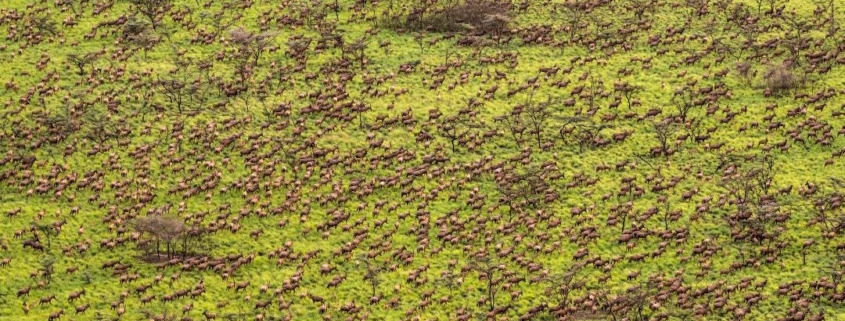
In this blog, Philip Winter explores the history and development of conservation in South Sudan from 1970s. The blog discusses how the prolonged conflicts, as well as other factors such as illegal game hunting, have contributed to the reduction in wildlife populations, which a few national and international conservation organisations are trying to reverse. To protect and develop the wildlife resource potential, considering that South Sudan has the largest animal migration in Africa, the blog…
With the next general elections set to take place in December 2024, this Review aims to tackle crucial questions around the delineation of new geographical constituencies in line with the recently passed South Sudan’s National Elections Act, 2023. The Review analyses the constituency threshold formula proposed by in the Act and uses the suggested calculation guidelines to construct the possible scenarios for the distribution of geographical constituencies, as well as considering the challenges that come…
This report explores the practice of bride prices in South Sudan and its related social, economic, and political implications on gender relations and violent conflict. The report suggests that the bride price appears to contribute to gender-based violence and violent conflict in the country. The report also provides insights on how stakeholders can tackle these challenges linked to the practice of bridge price. Read more here
Using the case study of three countries, including South Sudan, this paper explores the extent to which a bottom-up approach has been integrated in the Humanitarian-Development-Peace (HDP) nexus process, particularly from the perspective of humanitarian actors. Specifically, the paper finds that this integration has been challenging mainly due to power imbalance intrinsic to the political positioning of international humanitarian actors. Finally, the paper provides some suggestion how to effectively implement HDP using a bottom-up approach….
ABSTRACT Many places affected by violent conflict are also those with the lowest capacity to respond to the impacts of climate change and, therefore, some the most vulnerable. Consequently, it is here where climate change most likely results in social tensions that could escalate into or sustain conflicts. This double burden of compounding conflict and climate risks suggests an urgent need for climate adaptation interventions. However, so far adaptation agendas are often poorly aligned with…
Curious to broaden your search to Sudan?
Try our sister facility CSF