Though elections are now postulated for next year, South Sudan remains in crisis. Conflict continues to scar the country, and climatic shocks exacerbate already acute resource scarcity, leaving approximately 76 per cent of South Sudan’s population surviving on humanitarian assistance. The regime of South Sudanese President Salva Kiir survives by diverting revenues in three key areas—oil production, humanitarianism, and loans from international financial institutions—to the benefit of an elite class in Juba, but at the…
repository
CSRF Research Repository
The CSRF Research Repository aims to support greater contextual knowledge for policy makers, programme managers, and implementers by providing a searchable repository of research, analysis, and resources, and providing periodic updates on new research and analysis.
This report assesses the intersection between the global food crisis and food security programming, drawing from the experience of multiple countries – including South Sudan. The report provides a set of recommendations and ways forward to overcome some of the challenges presented, and enhance food security programming in a gender- and conflict-sensitive manner. Read here
The article aims to problematizes the notion of civilians in South Sudan’s Protection of Civilians (PoC) sites. In particular, the research focuses on the notions of protectors and protected in PoC sites, investigating in more detail the broader and more complex identities of “civilians” in everyday practice, juxtaposing these with the simplistic bureaucratic or legal frameworks offered by international law and PoC discourse. Read more here
The article offers a nuanced account of how identities are negotiated and contested in South Sudan, by focusing on how Murle and ŋalam identities were deployed in different ways in different places in overlapping periods during a time of armed conflict. The article focuses on the 2012-2014 period of war between the South Sudanese government and a largely Murle rebellion. Read more here
This article explores the integration of peace components in H-D-P nexus programming drawing from qualitative examples across four countries, including South Sudan. Specifically, the article proposes an analysis of how local communities are using integrative peace/conflict approaches to enhance resilience in contexts with ongoing violence. Read here
This article in the Horn of Africa Bulletin conducts a thorough analysis of the persistent exclusion of women from decision-making processes in peacebuilding initiatives across the Horn of Africa, employing South Sudan as a case study. The article takes a deep dive into outlining the importance of women’s inclusion in peace processes, not just as a matter of justice and rights, but also for achieving more comprehensive and lasting peace outcomes. Read more here
Focusing on gender in South Sudan, this meta-analysis provides an overview of the literature available on gender dynamics with a special attention on women. It looks at their role in politics and peacebuilding, conflict related sexual violence (CRSV) and sexual and gender-based violence (SGBV), and explores the changing roles of women in times of conflict. The analysis concludes with a brief assessment of gendered access to education and its evolution over time.
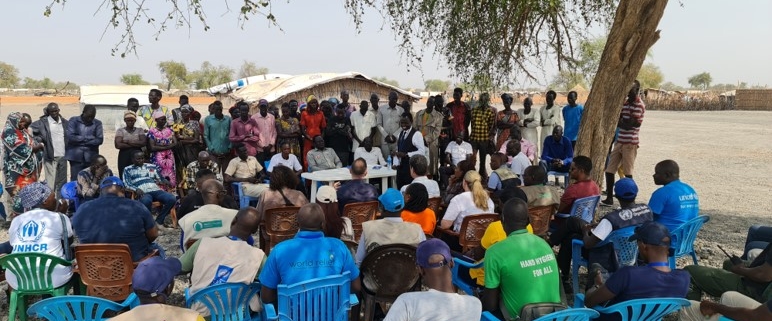
The ‘Triple Nexus’: Where the humanitarian, development and peace sectors work together to make the most of their comparative advantages to enable a more coherent, efficient and collective response to global challenges. This is an attractive prospect in South Sudan, which continues to experience a range of interconnected crises and shocks that cannot be addressed in isolation. Donors and organisations at all levels therefore proactively engage each other to share information and knowledge, ensure better…
This evaluation assesses the combined Dutch efforts to promote stability in fragile contexts and break the vicious cycle between (ethnic) tensions, armed conflict, instability and weak governance. It focuses on the period 2015-2022, and includes all Dutch foreign instruments, including diplomatic efforts, development cooperation and military interventions. Read more here
The sudden outbreak of conflict in Sudan and the sheer amount of displacement has been an immense challenge. Given the scale of the needs and the number of partners involved, the overall humanitarian response in Renk has overcome many difficulties and has been making positive progress. This report highlights four areas to prioritise in Renk as the response transitions from emergency to a more longer-term intervention: onward movement, intercommunal tensions and violence, protection and SGBV,…
Curious to broaden your search to Sudan?
Try our sister facility CSF