
This report discusses community engagement with armed actors, and identifies factors, actions, and actors can influence such engagement. The report finds that community engagement with armed actors presents both opportunities and challenges. Finally, the report provides suggestions on how national, and international peace, protection and humanitarian actors can effectively engage with armed actors through enhancing complementarity between humanitarian, especially protection, and peacebuilding actors. Read more here
repository
CSRF Research Repository
The CSRF Research Repository aims to support greater contextual knowledge for policy makers, programme managers, and implementers by providing a searchable repository of research, analysis, and resources, and providing periodic updates on new research and analysis.
This article provides a multidimensional report of the persistent farmers-herders conflict in South Sudan, delving into its historical background, root causes, far-reaching consequences, potential prevention/management strategies and recommendations for actors and policymakers in South Sudan.
This SIPRI Policy Report synthesizes the data on small arms and light weapons (SALW) diversion from the United Nations Panel of Experts reports on the five UN arms embargoes in place in sub-Saharan Africa in 2022—on the Central African Republic, the Democratic Republic of the Congo, Somalia, South Sudan and Sudan (Darfur region). The report provides a typology on the sources of illicit SALW in the states and regions under embargo and discusses the challenges…
Focusing on peace in South Sudan, this meta-analysis provides an overview of the literature available on formal peace agreements – their limitation and challenges, local level conflict prevention and resolution mechanisms, and disarmament, demobilisation, and reintegration (DDR) processes in South Sudan. Specifically, it explores the structural limitation and implementation challenges of the formal peace agreements and their legacy, as well as looking particularly at the DDR processes envisaged as parts of these agreements. Finally, it…
This report focuses on the use of biometric registration technology in the delivery of humanitarian aid in South Sudan. The report identifies conflict sensitivity risks and opportunities associated with the use of biometric technology, especially in conflict-affected and remote areas. Finally, the report outlines some recommendations on how to use biometric technology in a more effective, efficient and conflict sensitive manner.
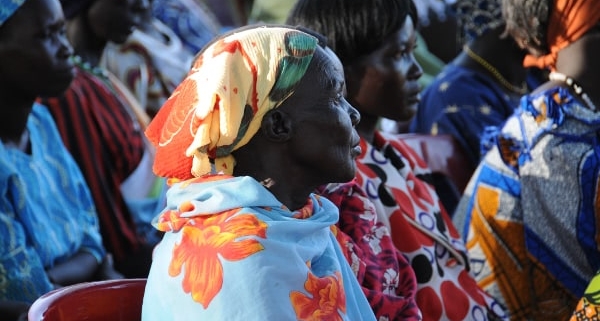
In this blog, Lona Elia Morgan and Livia Oliver discuss the concept of gender and conflicting perceptions of the concept among South Sudanese communities. Based on their extensive gender work, they explore different perceptions around gender and the related impact on conflict dynamics, as well as on aid programming, providing insights on how aid actors can change these perceptions and mitigate risks on aid interventions. In South Sudan, gender sensitivity is increasingly being integrated…
This Anthology was developed by the Rift Valley Institute, and it includes their research produced over the period of 2001 and 2021. As such, the Anthology spans a vast array of topics, including elections, epidemics, mobilisation and resistance, war, etc. Read more here
This report provides an assessment of South Sudanese’s perceptions of everyday safety for the period of 2018 to 2023, identifying an overall positive trend with differing views when broken down to genders, age groups, locations, and marital status. For instance, women in IDP camps have experience a worrying regression in their safety in 2022-2023. Conflict histories and prior exposure to violent events does not entirely account for the correlation between experiences of safety and marital…
Focusing on five neighbouring countries, including South Sudan, this report examines the experience of the refugees and returnees fleeing the Sudanese conflict. The report argues that the presence of the refugees and returnees in countries affected by conflict is likely to aggravate tensions. It also provides recommendations on how the international community can address and prevent further tensions, alleviating the humanitarian needs and finding durable solutions for the displaced populations. Read more here
This briefing provides field-based reflections and Conflict Sensitivity Lessons of the Partnership for Peace, Recovery and Resilience (PfPRR) in Rubkona, Leer & Mayendit, South Sudan. The reflections build on the CSRF’s accompaniment to PfPRR stakeholders in Rubkona/Bentiu and point at some key lessons learned, including the significance of the PFPRR as platform for collaboration, the importance of leadership at all levels, increased ownership by the involved agencies and that greater inclusiveness should be encouraged.
Curious to broaden your search to Sudan?
Try our sister facility CSF