
Entries by CSRF

As the aid community might be less aware of droughts amidst flood-hit areas, this blog by the Agency for Women and Children Development (AWACD), Ranga Gworo and CSRF, highlights the implications of drought on food insecurity in Mayendit County, Unity State. The blog also discusses the intersections between food insecurity and droughts and outlines some conflict-sensitive considerations for responding to drought-induced food insecurity in Mayendit.   Stories of flooding dominate headlines in South Sudan, with…
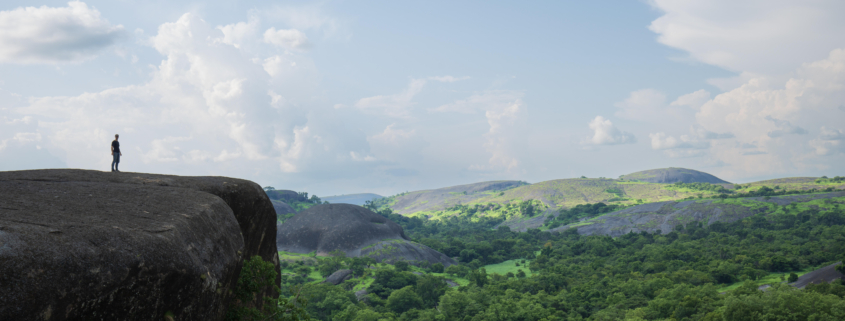
South Sudan’s wildlife conservation sector has only recently come to prominence, with new evidence of species, including the largest mammalian migration on the planet, raising some of the country’s National Parks and Game Reserves to Key Biodiversity Area status. Conservation has been a late starter, due in large part to the country’s more visible needs relating to basic human requirements, political stability and lasting resolution to seven decades of recycling civil wars and armed conflicts….

Wildlife conservation and land management knowledge and practices are deeply enshrined in the socio-cultural and economic life of South Sudanese communities that live around wildlife areas. Some of these indigenous conservation practices have been eroded by crises, climatic hazards and small arms proliferation, which drive and enable greater reliance on wildlife as a source of food and livelihoods. Yet, communities still retain important knowledge, values and cultures around wildlife that could be crucial resources for…

South Sudan has a diverse private sector, from sole traders and producers working in rural and urban markets to small and large local, national and international companies with different scales of investment. Both the private and aid sectors have shaped, and been shaped by the new national economy that has emerged directly out of the massive state-building projects, extractives industries, and aid investments of the 2000s, as detailed below. There are many challenges for the…

This report provides an analysis of gender dynamics in community social protection in Northern Bahr El Ghazal (NBG), South Sudan. The analysis is based on field research and a review of desk literature conducted in March 2025.  Semi-structured key informant interviews and focus group discussions were conducted in NBG and Juba with a total of 38 respondents (9 men and 29 women) respondents included individuals aged between 18 and 80 years, and from diverse social…

This blog by Martina Santschi and CSRF calls for a conflict-sensitive engagement on communal land tenure, especially the use of rangelands, forests, and wetlands in South Sudan. As such, the blog is relevant for aid actors who engage in livelihood support, development, infrastructure building, support to returnees, refugees and IDPs, housing land and property issues, and conservation organisations. Settling and farming creates visible marks through buildings, roads, cleared land, ploughed soil, vegetables and grains growing…

As donor aid is shrinking, the importance of social protection is growing, with more focus on how the most vulnerable members of communities can survive. The purpose of this research is to analyse how humanitarian aid-based social protection interacts with community-based social protection, and the conflict sensitivity risks involved. The CSRF team conducted focus group discussions (FGDs) and individual key informant interviews (KIIs) with representatives of I/NGOs, community, local authority, church, traders, among others in…

Area-based approaches are increasingly utilised in conflict-affected contexts and in combination with humanitarian-development-peace (HDP) nexus interventions. In South Sudan, the United Nations Reconciliation, Stabilization, and Resilience Trust Fund (RSRTF) and the United States Agency for International Development (USAID) are implementing such programming. Both models are beginning to yield short- or medium-term results, revealing opportunities and limitations to area-based approaches being applied to peacebuilding or Nexus programming in South Sudan. This report reflects on the early…

Photo credit: Benoit Morkel / Fauna & Flora Written by Ranga Gworo, this blog explores the extent to which local communities in South Sudan value wildlife. It also discusses strategies that local communities use to protect wildlife. Finally, the blog shares some suggestions on how conservation interventions can apply conflict sensitive conservation approaches. South Sudan is rich in biodiversity. Despite years of conflict that has led to the reduction of the number of Africa’s Big…

The end of the R-ARCSS transition period and the possibility of elections make this a key moment for peace and stability in South Sudan. In many areas, despite an escalation of incidents of violence after R-ARCSS, increased government control in areas across South Sudan means that many state and county governments are actively pursuing an agenda of stability. Yet, for most South Sudanese, this current state of affairs is not what the Dinka could call…